
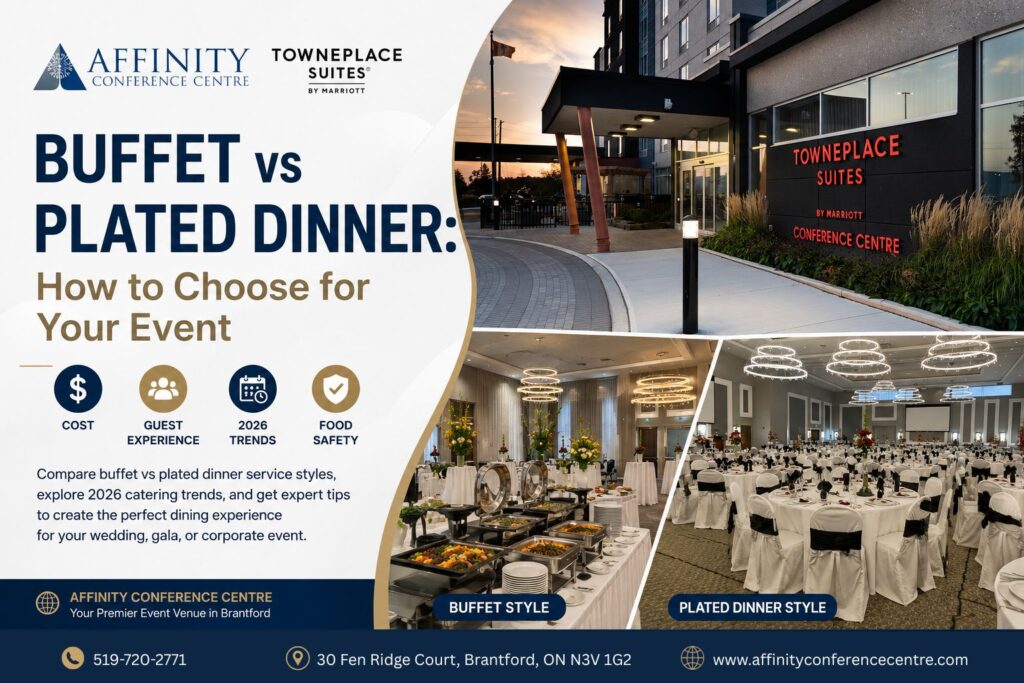
One of the first questions every host faces once the venue is booked is: buffet or plated dinner? It feels like a small detail, but it actually shapes your guest experience, your budget, your timeline, and even how formal your event feels from the moment guests walk in.
There’s no universally “right” answer — the best choice depends on your guest count, your event’s tone, and what kind of evening you want to create. Whether you’re planning a wedding reception, corporate event, or gala, here’s how to think it through for your next event in Brantford.
The Core Difference
A plated dinner means guests stay seated while servers deliver each course directly to the table — a formal, structured experience where timing and presentation matter. A buffet lets guests move through food stations and build their own plate, creating a more social, flexible atmosphere.
Neither style is inherently “better” — they simply serve different goals.
Buffet vs Plated Dinner: Quick Comparison
| Feature | Buffet | Plated Dinner |
| Guest Experience | Flexible and social | Formal and structured |
| Menu Variety | High | Limited to selected entrées |
| Service Style | Self-serve | Server-attended |
| Space Requirements | Needs buffet stations | More dining space |
| Dietary Flexibility | Excellent | Requires advance planning |
| Best For | Casual and large events | Formal events and weddings |
Plated Dinner: Best For
1. Formal Weddings, Galas, award dinners, and corporate conferences and banquets where presentation and pacing matter.
2. Events With a Structured Program — speeches, a head table, or a timed run of show
3. Smaller To Mid-Sized Guest Counts, where portion planning reduces food waste
4. A Polished Tablescape — plated service leaves room for charger plates, elevated centerpieces, and full place settings
The tradeoff: plated service needs more serving staff and offers guests less menu flexibility (typically one or two pre-selected entrées).
Buffet: Best For
1. Larger or more casual gatherings — receptions, networking events, family celebrations
2. Guests with varied dietary needs — a buffet lets people build their own plate around allergies or preferences without a special request
3. A social, mingling atmosphere rather than a seated, timed program
4. Cost-conscious planning — buffets typically require fewer servers per guest, though savings vary based on menu complexity
The tradeoff: buffets need more floor space for stations, and lines can slow the evening down if there aren’t enough serving points for your guest count.
What’s Actually Trending in 2026
Catering has moved well past the old “buffet vs. plated, pick one” divide. A few shifts worth knowing about before you finalize your menu:
1. Interactive food stations:-
Taco bars, live pasta stations, and carving stations are now often blended into what used to be a straightforward buffet, giving guests a chef-attended experience without full plated service.
2. The hybrid model:-
Many hosts now open with a plated starter or soup course to set a formal tone, then move to a buffet for the main course to give guests variety. This is one of the fastest-growing formats for weddings and galas alike.
3. Dietary inclusivity as the baseline:-
Clearly labelled stations for gluten-free, vegetarian, and allergen-friendly options are expected, not a special request, in both formats.
4. Global and fusion menus:-
South Asian, Middle Eastern, and Latin-inspired dishes are increasingly requested across both buffet and plated formats, especially for multicultural celebrations and South Asian weddings.
5. Focused drink programs:-
A short, curated cocktail list replacing the standard open bar in both service styles, helping control cost while giving the event a clearer identity.
Don’t Forget Food Safety — Especially for Buffets
If you’re leaning toward a buffet, food safety matters more than most hosts realize, since food sits out longer and is handled by multiple guests. In Ontario, all food premises and catered events must comply with the Food Premises Regulation (O. Reg. 493/17) under the Health Protection and Promotion Act, which sets rules for hot and cold holding temperatures, sneeze guards, and food handler certification.
Locally, if your event is being catered or hosted in Brantford or Brant County, the Brant County Health Unit’s Food Safety program oversees compliance and can answer questions about special event food handling requirements. A reputable in-house caterer — like the team at Affinity Conference Centre — already builds these standards into every buffet setup, from temperature-controlled chafing dishes to proper food handler certification on-site.
How Affinity Conference Centre Handles Both
Whichever direction you choose, the logistics matter more than the label. At Affinity Conference Centre, our in-house catering team supports both plated dinner service and buffet-style catering for weddings, corporate events, and celebrations in our Grand Ballroom — including hybrid setups that blend a plated course with a buffet main. Our coordinators can walk you through a tasting and help you decide based on your guest count, program, and budget, so the food matches the feeling you’re going for.
Related Reading on Our Blog
1. What to Ask a Conference Centre Before You Sign the Contract
2. Baby Shower Planning Guide: Themes, Décor & Catering Ideas for 2026
3. South Asian Wedding Traditions to Celebrate at Affinity Conference Centre
4. How to Plan the Perfect Summer Corporate Retreat in Brantford
Frequently Asked Questions About Buffet vs Plated Dinners
Q: Which is cheaper — buffet or plated dinner?
A: It depends on your guest count. For bigger groups, buffets usually cost less per person since they need fewer servers. For smaller groups, plated dinners can actually work out cheaper because portions are planned in advance, so there’s less food waste.
Q: Can I do both buffet and plating at the same event?
A: Yes, and it’s actually one of the more popular choices right now. A lot of hosts start with a plated salad or soup course to keep things formal, then switch to a buffet for the main course so guests get more variety.
Q: Is a buffet less formal than a plated dinner?
A: Generally yes. Plated service feels more elevated and controlled since guests stay seated and are served. Buffets feel more relaxed and social since guests move around and serve themselves — which isn’t a bad thing, it just sets a different tone.
Q: Do I need any special permits for a buffet in Brantford?
A: Any caterer or venue serving food has to follow Ontario’s Food Premises Regulation, and events in Brantford-Brant fall under the Brant County Health Unit. If you’re working with an experienced in-house caterer, they’ll already have this covered for you.
Q: How do I handle guests with allergies or dietary restrictions?
A: Buffets actually make this easier since guests can build their own plate and avoid what they can’t eat, as long as stations are clearly labelled. For plated dinners, you’ll need to collect dietary info ahead of time so the kitchen can prepare individual meals.
“Still deciding between a buffet and plated dinner? Our event specialists can help you choose the ideal catering style based on your guest count, budget, and event goals.”
Ready to Plan Your Menu?
Whether you’re picturing an elegant plated dinner or a lively buffet spread, our team can help you design a menu and service style that fits your event, your guest list, and your vision.